
Ting Cave: A Natural and Buddhist Heritage Site of Luang Prabang Ting Cave is a beautiful natural cave formed by limestone mountains, located on the west bank of the Mekong River, opposite Pak Ou village where the Ou River joins the Mekong. Ting Cave is located approximately 30 kilometers north of Luang Prabang city, and is a famous tourist attraction in Luang Prabang Province and in the Lao PDR. Characteristics and History Ting Cave is divided into 2 caves: the Upper Cave and the Lower Cave, which are connected by a walking path. Each cave is spacious and contains more than 4,000 sacred wooden Buddha images. Origin of the name "Ting Cave": Although we do not know exactly when the word "Ting Cave" was named, the Lao Phuen Khun Borom book mentions that Ting Cave has been named since the time of Khun Lo, the first king of Laos. Ancient legends say that Khun Lo marched along the Ou and Mekong rivers to set up camp at Sop Ou (Pak Ou village area) and Pha Ting. Later, in the mid-14th century AD, Chao Fa Ngum the Great united and established the unified Lan Xang kingdom, marched from Cambodia and also established a base at Pak Ou village and Pha Ting. Therefore, the word Ting Cave has been named for a long time. Another issue is that Ting Cave has many stalactites hanging down the cliffs and in the cave holes, which are also called "rock milk". For this reason, local people call it Ting Cave. Geological Perspective: Due to geological processes over millions of years, the Upper Cave and the Lower Cave were both submerged in the seabed, which eroded the mountain to form the cave. In later eras, the sea moved, turning this area into mountains and forests, and leaving the traces of Ting Cave that we see today. Ting Cave and Human Settlement: For thousands of years, humans have moved into and lived in Ting Cave, possibly as a shelter for ancient humans. As agricultural evolution expanded, humans succeeded in living, society grew, and humans moved out of the cave to build houses in the plains and fertile areas, where they began to organize into groups. Therefore, the cave where they once lived became a place of worship, a place of reverence, and a place to pray to the spirits of their ancestors and various gods according to the beliefs of ancient humans. Ting Cave in the Buddhist Era: In Lao history before the Buddhist era, it is believed that it was initially a place of worship to the spirits of Phi Fa, Phi Thaen, the gods of Ting Cave, etc., as mentioned in the teachings of King Chao Fa Ngum in the 14th century. In the early 16th century AD (1527), a king named Phothisalath, who was devoted to Buddhism, ordered his people to abandon the worship of spirits, spirit houses, and various places of worship, and turn to Buddhism. Therefore, Ting Cave was one of the places that King Phosathilath turned into a place of Buddhist worship and has supported the cave ever since. Every year on the occasion of Lao New Year, the Lao king goes to the cave with the Buddhist people of Luang Prabang, and the royal family appoints artisans to carve Buddha images to offer to the cave for the people to worship. Most of the Buddha images are made of wood coated with red or black lacquer and gilded. Buddha Images inside Ting Cave Number of Buddha Images: Real evidence shows that there are more than 3,000 Buddha images built in the 18th and 19th centuries AD. The number of Buddha images built in the 17th and 20th centuries is small. Materials: Most of the Buddha images are made of wood, resin, while gold and stone are few. Among them, the Buddha images with beautiful and delicate art are those built in the early 18th and 19th centuries. Gold-plated and Silver-plated Buddha Images: In addition, gold-plated and silver-plated Buddha images were also found, but unfortunately, bad people have peeled them all off, leaving only the clay and the core of the Buddha images. Therefore, at present, Ting Cave is not only of historical significance for a long time, but also a place to accumulate the cultural heritage of the Lao nation and a place for future generations to study and research. Details of the Upper Cave and Lower Cave Lower Cave: The mouth of the Lower Cave is prominent and visible from the Mekong River. There is a path from the Lower Cave to the Upper Cave, which is about 60 meters high from the Mekong River. In this Lower Cave, there are approximately 2,500 carved Buddha images. The gathering point for visitors to the cave is the altar near the entrance, where flowers, incense, and candles are placed for worship. There is a carving of a hermit carrying a bag of medicine or herbs sitting in the Upper Cave at the entrance, and a large stupa on the highest base. Upper Cave: To reach the Upper Ting Cave from the pier, there are a total of 278 steps, which are 17 meters wide and 50 meters deep. In this Upper Cave, there is also an altar for the Buddha images. Inside the cave, there are also pictures of the cave in the past painted by Francis Garnier, painted between 1865-1867. Outside the cave, there is also a small stupa, which, according to legend, contains the bones of Pu Nyai Nyi (Pu Nya Ya Nya). Every year in the past, the King would sail up to bathe the Buddha images in the cave during the New Year. The facade and the cave door are beautifully carved with patterns in Lao style. Ting Cave is a place full of history, culture, and beautiful nature. Are you interested in learning more about traveling to Ting Cave, activities that can be done there, or information about other Buddhist beliefs in Luang Prabang?
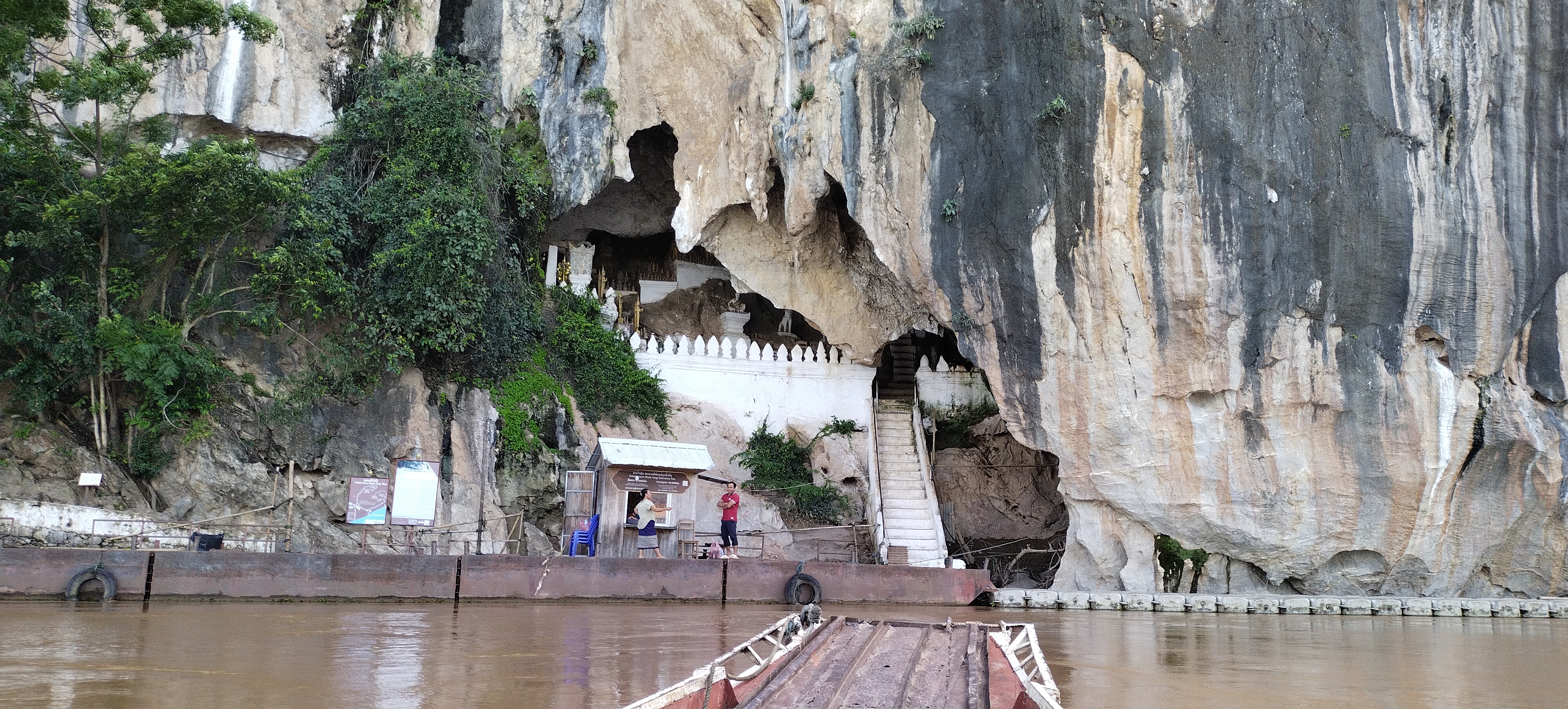
Ting Cave
Back to article list
 Invalid Date
 29/10/2026
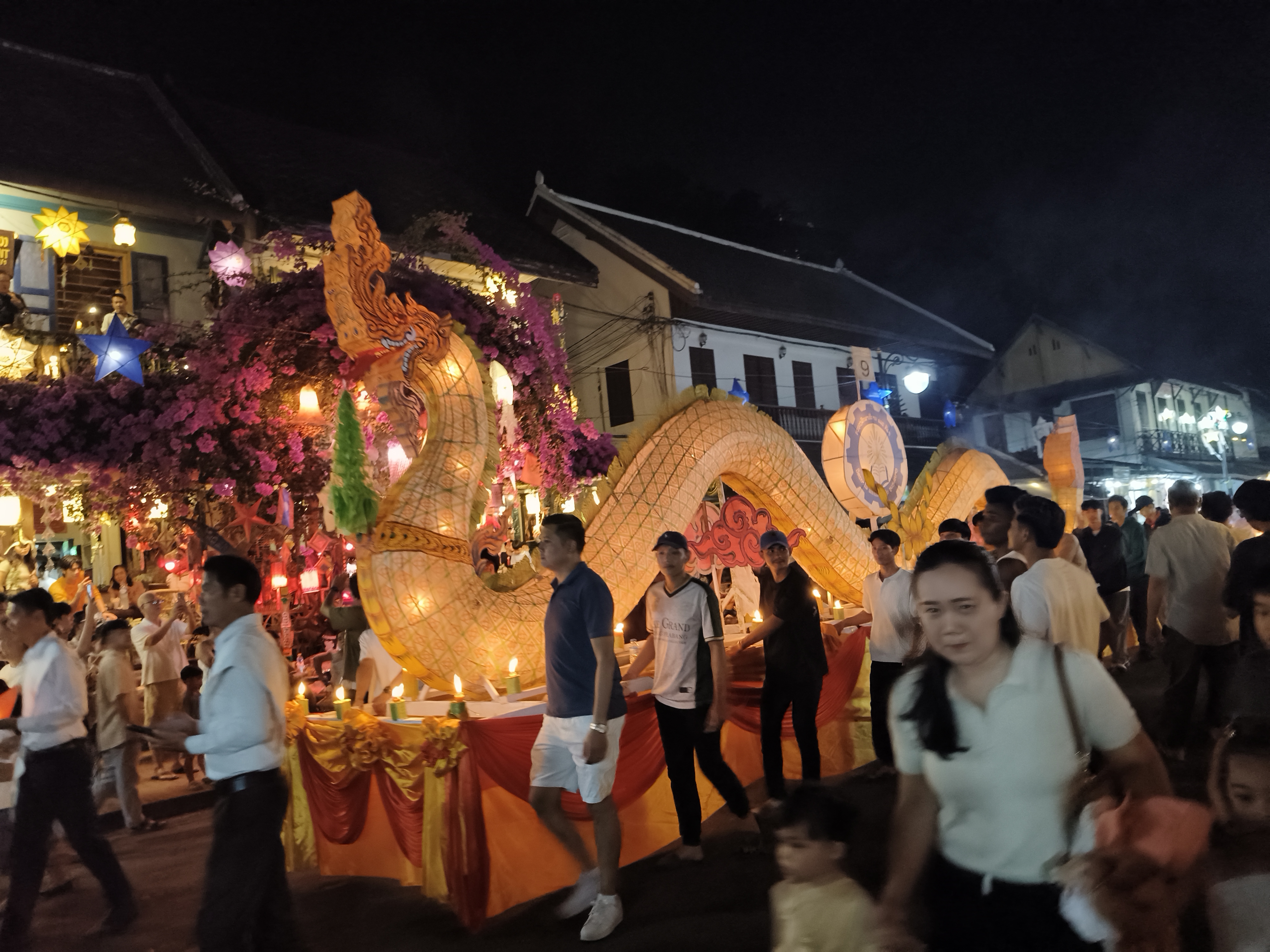
The Beauty of Luang Prabang: A Cultural Path and the Elegance of Lao Women at the Boun Ok Phansa Festival (Buddhist Lent Festival)
Introduction: The beauty that begins from the cultural heritage when the cool breezes of the changing season visit the Lao soil, along with the aroma of the Boun Ok Phansa festival that welcomes you, the essence of the capital city of Luang Prabang shines brightly.
 27/10/2026
The Festival Procession in Vientiane: A Showcase of Lao Culture, Beautiful Art, and the Marvels of Cultural Heritage
### The Festival Procession in Vientiane: A Showcase of Lao Culture, Beautiful Art, and the Marvels of Cultural Heritage Vientiane is a land that showcases cultural heritage, history, and the beautiful way of life of the Lao people.