Spiritual Center and Sacred Symbol
Sainyabuli Province, the land of the Lan Xang elephants, rich culture, and abundant nature, is located in the western part of the Lao People's Democratic Republic. Aside from being famous as the 'Land of Elephants' and an important agricultural economic hub, Sainyabuli is a land with a long history and sacred treasures that serve as the spiritual center for all ethnic groups. That sacred treasure is the 'Sainyabuli City Pillar Shrine'.
The City Pillar Shrine is not only a magnificent and unique architectural structure, but also a sacred site embodying the beliefs, faith, history, and soul of all the people of Sainyabuli. It is the central point representing the stability, peace, and prosperity of the province. In this article, we will delve into the history, exquisite architecture, beliefs and faith, and the role of the City Pillar Shrine as a major cultural tourism destination.
History and Significance of City Pillars in Lao Culture
The term 'City Pillar' holds profound meaning in the belief systems of Southeast Asian civilizations. Since ancient times, establishing a new city or community required 'burying a city pillar' as a symbol of stability and to declare territory.
Beliefs Surrounding the City Pillar
According to traditional beliefs, the city pillar is the dwelling place of the 'Suea Mueang' or 'Mahesak City Pillar', which are deities, guardian spirits, or ancestral spirits tasked with protecting the town and its people, preventing natural disasters, illnesses, and invading enemies. Having a firm city pillar is akin to having strong roots for the community.
Origins of the Sainyabuli City Pillar Shrine
The Sainyabuli City Pillar Shrine was established through the cooperation and dedication of the provincial administration, local residents, and religious leaders to serve as a center of unity and a blessing for the province. The selection of the site, the auspicious timing for laying the foundation stone, and the raising of the pillar all followed proper Buddhist and Brahmanical rituals according to ancient traditions to bring supreme auspiciousness.
Architectural Style and Splendid Landscape
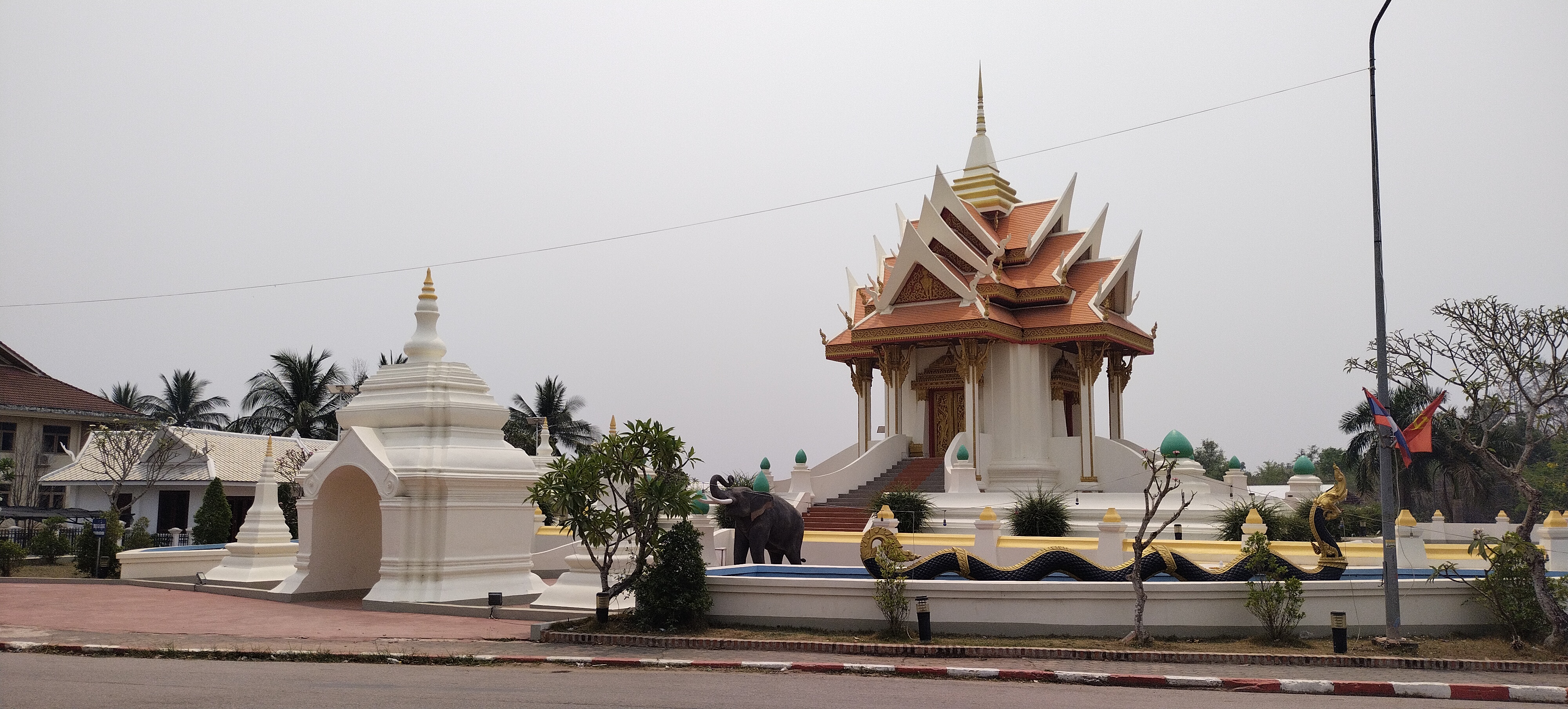
One immediately notices the majestic and extraordinary beauty of this city pillar shrine. The architecture of the Sainyabuli City Pillar Shrine is a seamless blend of traditional Lan Xang art and contemporary design.
       [ Auspicious Pinnacle / Golden Stupa ]
                    |
          [ 3-Tiered Prasat Roof ]
                    |
     [ Imperial Building / White Structure ]
       /            |            \
[ Grand Staircase ] [ Flower Garden ] [ Naga Water Basin ]
1. Building and Prasat-Style Roof
- Structure: The shrine sits on an elevated base as a pure white square building, symbolizing spiritual purity.
- Roof: The roof is a multi-tiered Prasat style (3 overlapping tiers) covered with orange-gold tiles, decorated with gable apexes ('Cho Fa') and finials ('Hang Hong') in traditional Buddhist and Lao royal architectural styles. The highest peak of the roof is a golden stupa pointing to the heavens, symbolizing the transmission of prayers and sanctity to the skies.
- Access: There are staircases on all four sides, each elegantly designed to lead visitors to the center where the main pillar is enshrined.
2. Surrounding Elements and Landscape
The landscape surrounding the city pillar shrine is meaningfully designed and filled with sacred symbols:
- Water Basin and Nagas: In the front area, there is a water basin adorned with large black and gold 'Naga' statues winding gracefully with power. The Naga is a symbol of abundance, water sources, and protection for Buddhism. The presence of the Nagas here signifies protection from danger and blessings of coolness and peace for Sainyabuli.
- Elephant Statues: Just behind the Nagas, visitors will see full-bodied black elephant statues. This is an indispensable symbol for Sainyabuli Province, as elephants are companion animals to the region and represent Sainyabuli (hence the annual Elephant Festival). Elephants symbolize power, endurance, and grandeur.
- White Stupa Replica: On the side stands a white stupa replica featuring arched doorways, showcasing exquisite artistry that completes the sacred religious atmosphere.
- Landscaping: Ornamental plants such as frangipani (Champa flowers) and neatly trimmed green bushes are planted, providing a serene and cool environment ideal for worship.
Lifestyle, Beliefs, and Associated Rituals
The Sainyabuli City Pillar Shrine is not merely a static structure; it has 'life' through the activities and daily lives of the locals.
Daily Worship
Every day, locals and domestic and international tourists can be seen bringing incense, candles, flowers, and offerings to pray for blessings. Most come to pray for:
- Safe travels (especially those traveling out of the province or country).
- Prosperity in business and career.
- Family well-being and recovery from illnesses.
Rituals During Major Festivals
On occasions like Lao New Year (Pi Mai Lao) or major provincial festivals such as the Sainyabuli Elephant Festival, the provincial administration and citizens hold grand religious and worship ceremonies for the city's guardian spirits. These include chanting, almsgiving, and traditional blessing dances to express gratitude to the sacred entities that have protected the city throughout the year.
Role as a Tourist Attraction and Conservation Site
Today, the Sainyabuli City Pillar Shrine has become one of the most important 'landmarks' or photo spots in Sainyabuli town. Visitors coming to the province who fail to pay their respects at the shrine are said to have not truly arrived in Sainyabuli.
Key Cultural Elements & Landscape Features3-Tiered Prasat Shrine: Prosperity and religion, pure white with golden-orange roof, magnificent.Naga Statue: Protector and water symbol, black and gold, winding in the front water basin.Elephant Statue: Symbol of the 'Land of Elephants' Sainyabuli, majestic black, highlighting provincial identity.
Regular cleaning, nighttime illumination, and landscape management demonstrate the local community's dedication to preserving this sacred site so it endures alongside Sainyabuli Province forever.
Conclusion
The Sainyabuli City Pillar Shrine is not just bricks, stones, or concrete built into a beautiful structure; it is the 'heart' of Sainyabuli Province. It is where the love, unity, history, culture, and faith of all ethnic people are melted into one.
The magnificent imagery of the city pillar shrine, featuring Nagas, elephant statues, and the majestic Prasat roof, will remain an impressive memory and a sacred symbol that protects and guides Sainyabuli toward continuous prosperity. If you have the opportunity to visit this land of elephants, be sure to stop by, pay your respects, and witness the beauty of this city pillar shrine with your own eyes at least once in your lifetime.